
Why Bamboo Room Dividers Are Becoming Popular in Modern Interior Design
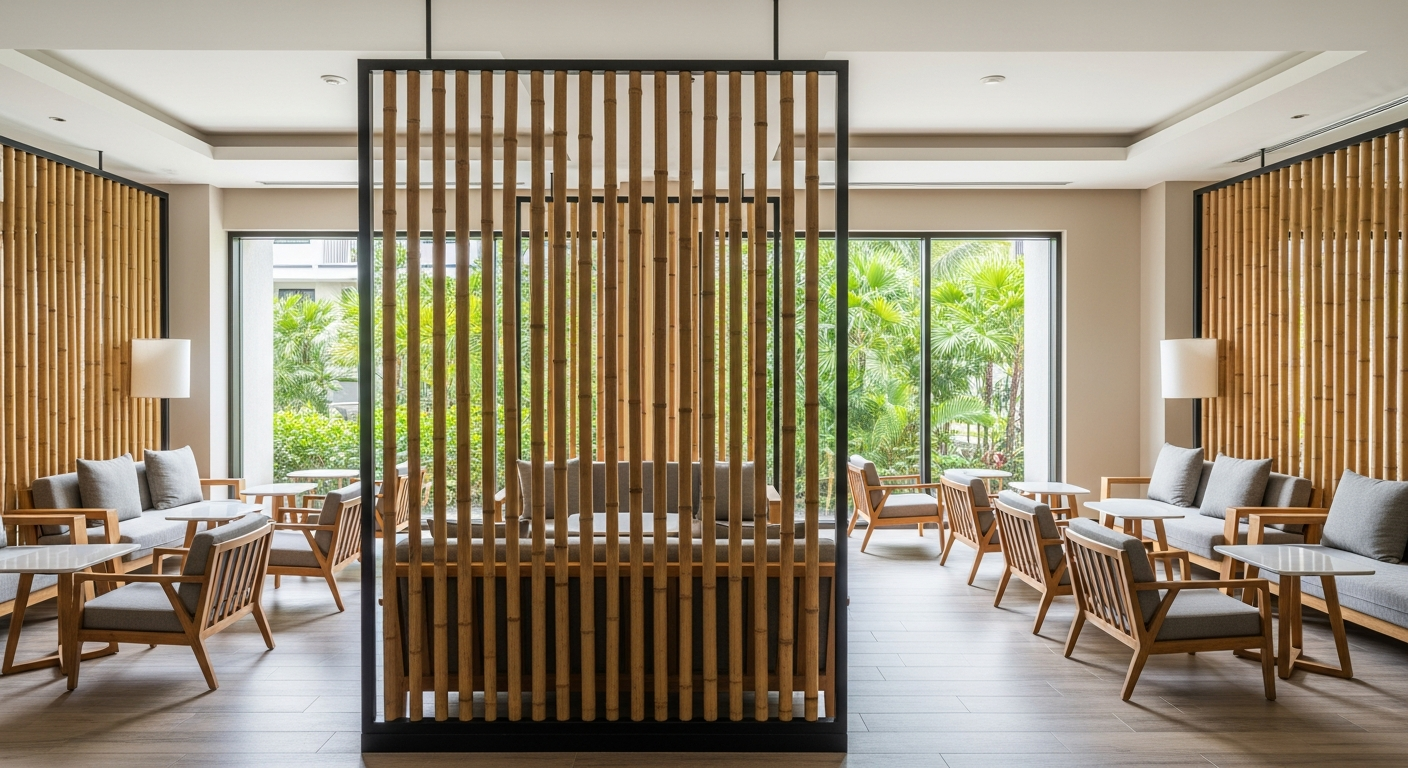
The landscape of modern interior design is undergoing a significant shift, prioritizing sustainability, flexibility, and connection to nature. In this context, the bamboo room divider has emerged as a preferred solution for architects and designers seeking to create sophisticated, functional spaces. Once associated primarily with traditional or tropical aesthetics, today’s bamboo partitions are integral to contemporary commercial and luxury residential projects, driven by the global trend towards natural materials and Japandi design.
As professionals navigate the demands of open-plan layouts while maintaining a need for defined zones, bamboo offers a unique combination of aesthetic warmth, acoustic benefits, and structural integrity. Bamboocrafted recognizes this growing demand and supports the industry with custom architectural systems that leverage the unique properties of this remarkable material.
The Biophilic Imperative and Material Warmth
One of the primary drivers behind the popularity of bamboo room dividers is the increasing emphasis on biophilic design. Modern commercial and hospitality interiors often risk feeling cold or sterile due to the extensive use of glass, steel, and concrete. Bamboo introduces essential organic texture, color, and warmth that instantly softens a space.
Unlike synthetic alternatives, a bamboo room divider provides a tactile connection to the natural world. This is not merely aesthetic; studies consistently show that integrating natural materials improves well-being, reduces stress, and enhances cognitive function for occupants—crucial factors in hospitality and corporate environments.
Flexibility and Spatial Definition Without Permanence
The modern preference for open-plan layouts in hotels, offices, and restaurants brings challenges regarding privacy, acoustics, and spatial function. A bamboo room divider offers an elegant, non-permanent solution for defining zones without compromising the overall sense of openness.
These systems can be designed for varying degrees of visual permeability. Solid bamboo screens can create secluded meeting areas or private dining nooks, while more open lattice designs allow light and air to flow, maintaining a sense of connectivity. This flexibility is essential for dynamic spaces that must adapt to different uses throughout the day, a core capability of the materials systems Bamboocrafted develops for clients.
Unmatched Sustainability for Green Building Standards
For architects and developers focused on sustainable design and achieving certifications like LEED or BREEAM, bamboo is a powerful asset. Technically a grass rather than wood, bamboo is one of the fastest-growing plants on Earth, with some species growing up to three feet in a single day. It can be harvested without killing the plant and regenerates quickly.
Specifying a bamboo room divider significantly reduces the carbon footprint compared to traditional partitioning materials. This alignment with environmental responsibility is a major factor in its adoption for high-profile, eco-conscious hospitality and commercial projects where sustainability is a core brand value.
Aesthetics and the Rise of Japandi Style
The convergence of Japanese minimalism and Scandinavian functionality—known as Japandi—has heavily influenced modern interiors. This style values clean lines, raw textures, and natural materials, making bamboo an ideal choice.
A bamboo room divider perfectly embodies the Japandi aesthetic. It offers structural simplicity with rich natural detail. The variety of finishes available, from natural blonde to carbonized tones and custom stains, ensures compatibility with diverse contemporary color palettes.
Technical Performance and Customization
Beyond its visual and environmental appeal, bamboo delivers exceptional technical performance, crucial for commercial applications.
- Durability: Bamboo boasts high tensile strength and compressive strength, often surpassing that of traditional hardwoods, making it suitable for high-traffic environments.
- Acoustic Benefits: A bamboo room divider can help absorb sound, mitigating the common acoustic issues in large open spaces. Specially designed systems can enhance these properties significantly.
- Customization: Bamboocrafted specializes in custom product manufacturing. Architects and designers can specify exact dimensions, finishes, and configurations—whether sliding, folding, or fixed—to meet specific project requirements.
Professional Recommendations for Specifying Bamboo Room Dividers
To ensure optimal performance and aesthetic alignment, professionals should consider the following:
- Define Material Grade: Specify premium-grade bamboo to ensure structural consistency and high-quality finish, especially in luxury applications.
- Consider Environmental Exposure: While bamboo is naturally durable, dividers intended for areas with high humidity or direct sunlight require specific treatments and finishes to prevent movement and fading.
- Integrate with Lighting: Bamboo’s linear texture interacts beautifully with light. Consider integrated LED lighting or strategic directional lighting to highlight the material’s depth.
- Focus on Hardware: For operable systems (sliding or folding), select high-quality hardware that can support the weight of the panels and ensure smooth operation in commercial settings.
Frequently Asked Questions
Are bamboo room dividers suitable for high-traffic commercial areas?
Yes. Properly specified and engineered bamboo, especially the premium-grade material provided by Bamboocrafted, offers exceptional durability and impact resistance, making it ideal for hotel lobbies, restaurants, and busy office environments.
How is a bamboo room divider maintained in a commercial setting?
Maintenance is generally minimal. Regular dusting and occasional cleaning with a damp cloth and mild soap are sufficient. Periodically applying a recommended conditioner can maintain the finish and prevent drying.
Can a bamboo room divider provide effective acoustic privacy?
While standard screen designs primarily offer visual and psychological separation, specifically engineered bamboo panels can be constructed with sound-absorbing cores or in configurations that significantly improve acoustic performance between zones.
Is a bamboo room divider fire-rated?
Yes. When specified for commercial projects, bamboo products can be treated with fire-retardant coatings to meet relevant building and safety codes.
Conclusion
The popularity of bamboo room dividers in modern interior design reflects a broader shift towards sustainable, flexible, and well-being-focused environments. Architects and designers are recognizing that bamboo provides a unique combination of aesthetic warmth, technical performance, and ecological responsibility that synthetic alternatives cannot match. As the industry moves towards more nuanced space management, the versatility of bamboo partitions ensures they will remain a staple in sophisticated commercial, hospitality, and luxury residential projects.
For more information on integrating premium bamboo systems into your next project, or to discuss custom architectural solutions, contact the specialists at Bamboocrafted today.