
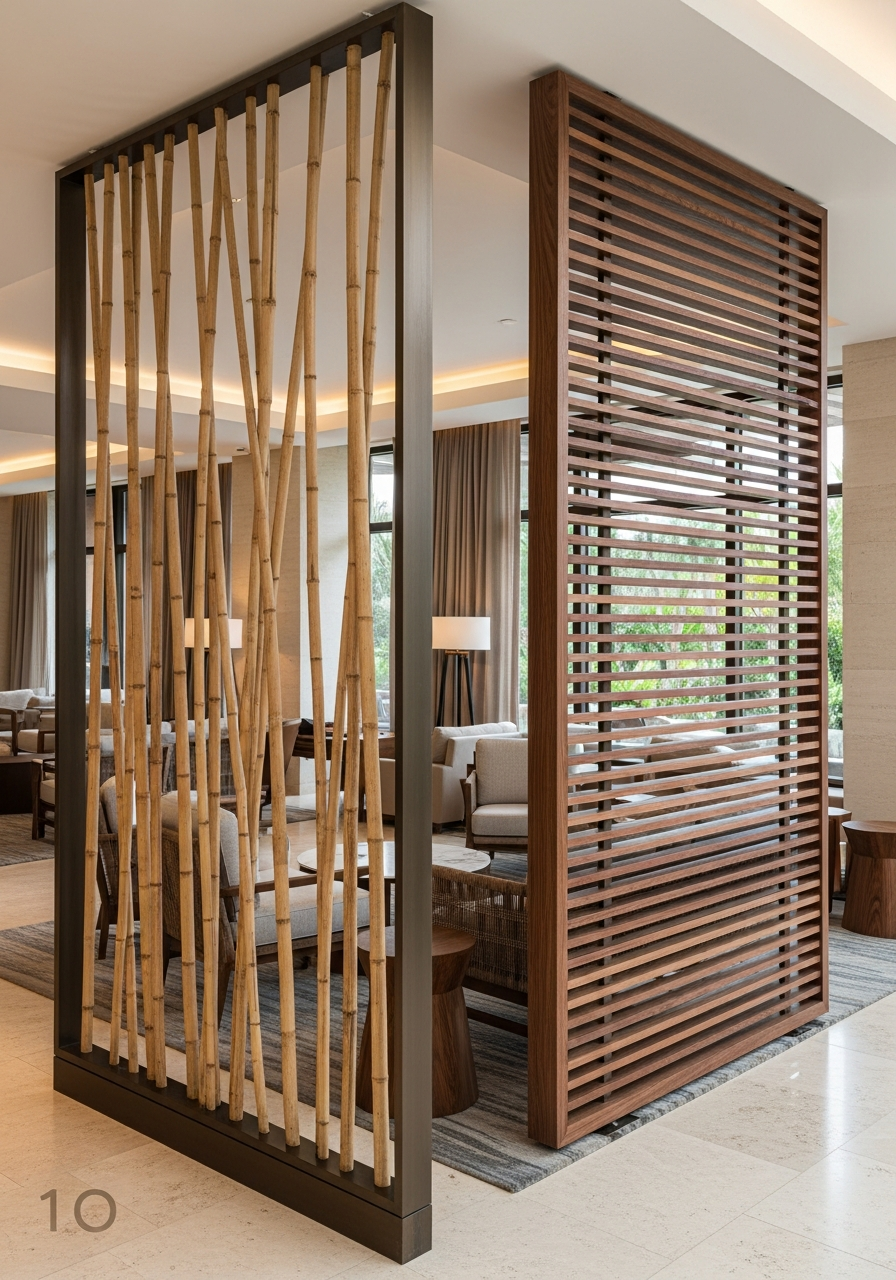
Bamboo Room Divider vs Wood Room Divider: Which Is Better for Interior Design?
In contemporary architectural practice, particularly within luxury hospitality and premium commercial sectors, the effective delineation of space is paramount. The challenge lies in creating distinct functional zones without compromising the overall sense of openness, light flow, and aesthetic cohesion. Room dividers and decorative screens are essential tools in this process, offering an elegant alternative to permanent walls.
Increasingly, architects and interior designers are prioritizing natural materials for these systems, driven by the principles of biophilic design and a growing demand for sustainable construction. When specifying natural material systems, the decision often comes down to a fundamental comparison: bamboo vs wood room divider applications.
While both materials offer warmth, texture, and inherent organic beauty, their performance characteristics, ecological footprints, and design possibilities differ significantly. This article provides a comprehensive architectural analysis of bamboo and wood as primary materials for internal partitions, helping hospitality developers, commercial designers, and project owners make informed decisions for their next high-value project.
The Aesthetic Argument: Textural Nuance and Design Styles
Both bamboo and wood excel at introducing natural textures into an interior, but they cultivate distinctly different atmospheres. The visual character of the material is the first and often most crucial consideration in luxury design.
The Elegance of Bamboo
A bamboo room divider often conveys a lighter, more delicate aesthetic. It is inherently associated with tropical modernism, Asian-inspired minimalism, and the highly sought-after Japandi style (a fusion of Japanese and Scandinavian design). Bamboo's clean lines, natural nodes (when used in pole form), and fine, consistent grain patterns make it ideal for creating subtle screens that filter light rather than blocking it entirely. Its natural coloration ranges from pale, natural golds to carbonized amber tones, offering a warm yet contemporary palette.
The Timelessness of Wood
Wood, on the other hand, is arguably more versatile, encompassing a vast range of species, from the deep, rich tones of walnut and the classic elegance of oak to the light, uniform texture of maple. Wood can be finished to achieve nearly any look, from rustic and distressed to highly polished and modern. In hospitality design, particularly in regions with established woodworking traditions, wood partitions can convey a sense of permanence, traditional luxury, or robust durability. The selection often depends heavily on the surrounding materials and the specific sub-genre of luxury design being implemented.
Structural Performance and Durability
In high-traffic commercial environments, such as luxury resorts, hotel lobbies, and premium restaurants, the material specified must demonstrate exceptional durability and dimensional stability.
Bamboo: Engineering for Strength
It is crucial to distinguish between raw bamboo poles and engineered bamboo architectural systems. While traditional poles are vulnerable to splitting, modern engineered bamboo is a vastly different product. Through processing—where bamboo is stripped, treated, and laminated under high pressure—engineered bamboo becomes one of the hardest and most stable natural materials available. For a bamboo vs wood room divider comparison in a commercial setting, Bamboocrafted's custom-engineered solutions often outperform common softwoods and rival many hardwoods in terms of hardness, tensile strength, and impact resistance. Crucially, engineered bamboo exhibits superior dimensional stability, making it less prone to warping or shrinking due to humidity fluctuations compared to solid wood.
Wood: Species-Dependent Performance
The durability of wood is entirely dependent on the species selected and the treatment applied. While high-end hardwoods like Ipe or Teak offer incredible durability (often used externally), common interior options like Oak or Maple can vary in hardness. Solid wood is anisotropic, meaning its properties differ depending on grain direction. This structure makes it naturally susceptible to movement in response to environmental changes. In large-scale partition walls, this can necessitate more complex joinery or expansion joints to prevent warping. When specifying wood, careful attention must be paid to the grade, moisture content, and finishing products to ensure long-term performance.
The Sustainability Imperative
For modern architectural projects, sustainability is no longer optional. LEED and other green building certifications require careful material sourcing.
Bamboo: The Ultimate Regenerative Resource
Bamboo is not wood; it is a grass. This is its single greatest environmental advantage. Bamboo can be harvested in just 3-5 years, compared to 20-50 years or more for most hardwoods. When harvested correctly, the bamboo rhizome remains intact, sending up new shoots without needing replanting. This makes bamboo an inherently regenerative and rapidly renewable resource. When considering a bamboo vs wood room divider through an ecological lens, bamboo is almost always the superior choice for reducing a project's carbon footprint and overall environmental impact, provided it is sourced from responsibly managed forests.
Wood: Sourcing with Responsibility
Wood can be a sustainable choice, but it requires significantly more diligence. Sustainable wood must be sourced from certified forests (e.g., FSC certification), ensuring responsible harvesting practices that protect biodiversity and ecosystem health. The longer maturation period of trees means that even with responsible management, wood is not as rapidly renewable as bamboo. However, wood can be a circular material, especially when repurposed or recycled, and its carbon sequestration capabilities are well-documented.
Maintenance and Lifecycle Considerations
The total cost of ownership is a critical factor for hospitality operators and commercial developers.
Maintaining Bamboo Systems
Engineered bamboo systems typically require minimal maintenance, similar to high-quality wood furniture. They are usually pre-finished with durable, low-VOC coatings that protect against UV degradation and moisture. Routine cleaning with a damp cloth is sufficient. However, long-term exposure to direct, intense sunlight can cause fading, and prolonged water contact should be avoided. The lifecycle of high-quality engineered bamboo architectural systems can match or exceed that of traditional wood when properly installed and maintained.
Maintaining Wood Systems
The maintenance required for wood partitions depends entirely on the finish. A high-quality polyurethane or lacquer finish will provide excellent protection, while oiled finishes may require periodic re-application. Wood can be susceptible to scratches and dents, though these can often be repaired through sanding and refinishing—a significant long-term benefit over some laminate materials. However, in comparison to the inherent resilience of engineered bamboo, some wood species may require more frequent attention in high-contact areas.
Application Recommendations: Matching Material to Context
Ultimately, neither material is universally "better." The selection must be driven by the specific demands of the project and the desired design outcome. At Bamboocrafted, we specialize in understanding these nuances to recommend the ideal solution.
When to Specify Bamboo Room Dividers
A bamboo system is often the ideal choice for:
- Luxury Resorts and Spas: Environments prioritizing tranquility, natural light, and organic textures, particularly those embracing tropical or East Asian design influences.
- Japandi and Minimalist Interiors: Projects requiring a clean, precise, and visually lightweight partitioning solution.
- Green Building Projects: Developments aiming for LEED certification or emphasizing a commitment to rapidly renewable materials.
- High-Traffic Commercial Spaces: Utilizing the exceptional hardness and stability of engineered custom bamboo architectural products.
When to Specify Wood Room Dividers
Wood remains a strong contender for:
- Traditional and Classic Luxury: Projects where a traditional sense of permanence and rich, deep color palettes are required.
- Locally Contextual Design: Projects aiming to connect with local architectural traditions and utilize indigenous, certified wood species.
- Specific Finish Requirements: Designs calling for extremely dark, complex, or highly specific wood-grain patterns that cannot be achieved with bamboo.
Conclusion: Making the Informed Choice for Premium Interiors
The choice between bamboo vs wood room divider systems is not merely an aesthetic one; it is a complex decision involving considerations of durability, sustainability, and architectural context. While wood offers timeless versatility, engineered bamboo emerges as a exceptionally strong, stable, and sustainable alternative, particularly suitable for the rigorous demands of luxury hospitality and modern commercial projects.
For architects, interior designers, and hospitality developers seeking to create sophisticated, high-performance, and ecologically responsible spaces, bamboo partitions offer a compelling solution. Bamboocrafted is dedicated to providing premium bamboo architectural materials and custom systems tailored to the exact specifications of each unique project.
Explore the potential of natural materials in your next development. Contact our project specialist team for a consultation, and let us help you select the ideal architectural solution.
Frequently Asked Questions
Which is more durable for high-traffic areas, bamboo or wood room dividers?
For commercial and high-traffic hospitality applications, properly specified and engineered bamboo often exhibits superior durability to many common hardwoods. Engineered bamboo is exceptionally hard and dimensionally stable, making it highly resistant to dents, scratches, and the warping associated with humidity fluctuations.
Can bamboo room dividers be customized for specific hospitality designs?
Yes. Bamboocrafted specializes in providing fully customized bamboo architectural systems. This includes precise tailoring of dimensions, slat or pole configurations, and finishes to perfectly align with the design vision and functional requirements of luxury resorts, hotels, and restaurants.
How do the maintenance requirements for bamboo compare to wood?
Generally, the maintenance required for an engineered bamboo system is comparable to that of pre-finished wood. Both materials benefit from regular, simple cleaning and protection from excessive moisture and direct, intense sunlight. The durable finishes applied to quality architectural bamboo minimize ongoing maintenance needs.
Which material is better for acoustic performance in a restaurant setting?
Both bamboo and wood can be engineered into acoustic screening solutions. However, the specific design of the partition—such as incorporating sound-absorbent backing materials or using slatted configurations that diffuse sound—is more critical than the base material choice itself.
How can Bamboocrafted support architects and designers in selecting the right material system?
We provide comprehensive support, from technical material data and samples to design consultation and full custom manufacturing. Our team understands the rigorous requirements of hospitality and commercial projects and works closely with design professionals to ensure the selected natural material solution meets all aesthetic, performance, and sustainability goals.