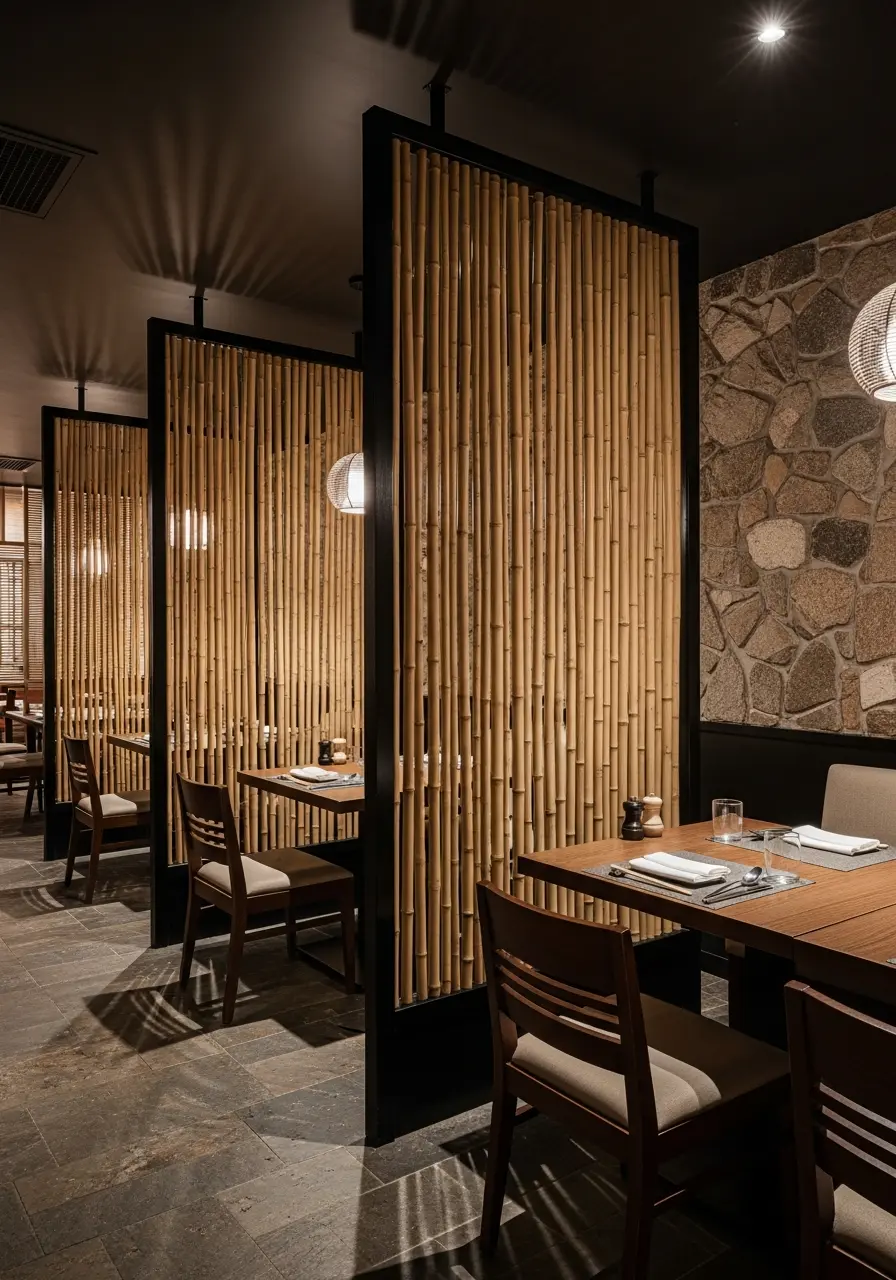
How Bamboo Restaurant Partitions Create Private Dining Areas
In the competitive landscape of hospitality design, creating a memorable and comfortable guest experience is paramount. Architects and interior designers are constantly seeking innovative spatial solutions that balance openness with intimacy. A well-designed restaurant bamboo partition system offers an elegant, sustainable, and highly effective architectural element to zone large dining floors, establishing secluded private dining areas without sacrificing the overall atmosphere of the establishment.
This article examines the strategic application of bamboo partitioning systems in luxury hospitality, exploring their acoustic benefits, aesthetic versatile, and contribution to dynamic, high-performance commercial interiors.
The Strategic Importance of Private Dining Areas in Modern Hospitality
Modern restaurant design often favors large, open floor plans that maximize space utilization and foster a vibrant atmosphere. However, the requirement for visual and acoustic privacy remains a critical operational and design consideration. Private dining areas are essential for accommodating corporate events, intimate celebrations, and high-profile guests who demand discretion.
The challenge for architects lies in creating these secluded zones without erecting permanent, light-blocking walls that disrupt the spatial flow and architectural intent. This is where engineered natural material solutions like bamboo partitions become invaluable tools for intelligent spatial programming.
How Bamboo Partitions Zone Commercial Spaces
A restaurant bamboo partition does more than simply delineate space; it architectural defines zones through visual and physical filtration. Unlike solid drywall, bamboo screens can be specified with varying degrees of opacity, creating a graduated transition from public to private areas.
1. Visual Filtering Without Light Loss
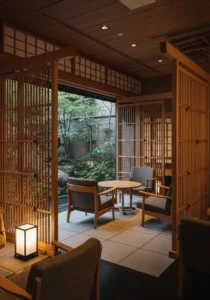
One of the primary advantages of utilizing bamboo screens is their ability to obscure views while allowing ambient light to permeate the space. In luxury hospitality, lighting is crucial for setting the mood. Solid walls often necessitate complex and costly secondary lighting schemes in new enclaves. By specifying bamboo screens with defined slat spacing, designers maintain natural or primary lighting continuity, creating a sense of spaciousness within the private zone.
2. Modularity and Spatial Flexibility
Commercial interiors must adapt to evolving operational needs. While permanent private dining rooms offer maximum seclusion, they represent inflexible real estate. Modular bamboo architectural systems can be designed as operable partitions, sliding screens, or demountable systems, offering hospitality operators the flexibility to configure private areas dynamically based on party size or booking requirements.
Acoustic Comfort: The Natural Advantage of Bamboo
Acoustics are frequently the most challenging aspect of large-scale restaurant design. Unmanaged reverberation and high decibel levels drastically diminish the dining experience, particularly in private zones where conversation is the focus. A solid restaurant bamboo partition or an engineered screen offers significant acoustic advantages over hard, reflective surfaces like glass or metal.
1. Sound Diffuser vs. Reflector
Bamboo is inherently a dense, fibrous material. When utilized in a screen or slat configuration, it acts as a natural sound diffuser. Rather than reflecting sound waves directly back into the space (creating echoes), the complex surface of the bamboo scatters and breaks up the sound waves, lowering the overall noise floor.
2. Attenuating Ambient Noise
When creating private dining areas, the goal is often to diminish, rather than completely block, the ambient buzz of the main dining room. This background activity provides atmosphere, but it should not overpower private conversation. A strategic placement of bamboo partitions, particularly when integrated with acoustic substrate materials, provides sufficient attenuation to create a sense of acoustic seclusion without creating an uncomfortable, dead silence.
Design Versatility: From Japandi to Tropical Luxury
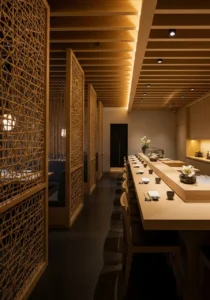
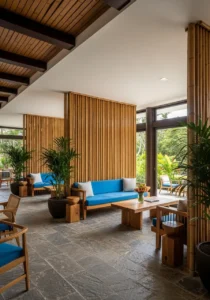
Aesthetically, a restaurant bamboo partition system offers unparalleled versatility, aligning perfectly with the current shift toward biophilic and Japandi design principles in luxury hospitality. Bamboo is not a monolithic material; it is a sophisticated architectural medium that can be specified in numerous forms, finishes, and configurations.
- Linear Slat Systems: Ideal for modern, minimalist, and Japandi interiors. These engineered bamboo systems provide clean, architectural lines, emphasizing height and offering precision control over spacing and privacy levels.
- Woven Bamboo Panels: These provide a richer texture, suitable for tropical luxury or contemporary organic designs. Woven patterns offer higher visual opacity, making them excellent for maximum seclusion.
- Natural Pole Installations: For a more raw, biophilic aesthetic, natural bamboo poles can be used in staggered formations, creating an organic ‘forest’ effect that partitions space effectively while serving as a signature design element.
Bamboocrafted works closely with architects to develop custom architectural systems that meet the exact aesthetic and performance requirements of the project, whether that involves natural finishes, carbonized tones, or custom stain applications.Sustainability in Hospitality Architecture
Sustainability is no longer a niche requirement; it is a core expectation in luxury development and corporate responsibility. Choosing a restaurant bamboo partition over conventional materials significantly enhances a project’s environmental credentials. Bamboo is rapidly renewable, sequestering carbon more efficiently than most timber species, and offers a low embodied energy profile when sourced responsibly.Integrating certified bamboo systems into hospitality interiors contributes to green building certifications such as LEED and WELL, while resonating with the growing demographic of environmentally conscious travelers and diners.Professional Recommendations for Implementation
For architects and designers planning to integrate a restaurant bamboo partition system, several technical and practical considerations are critical for project success:
Frequently Asked Questions
Can a bamboo partition provide total acoustic privacy?
While a restaurant bamboo partition is excellent for sound diffusion and attenuation, providing partial acoustic privacy by reducing ambient noise transfer, it does not typically provide complete soundproofing like a full, sealed wall construction. For optimal privacy, acoustic backing materials must be specified with the bamboo system.
How durable is bamboo for high-traffic restaurant environments?
Engineered bamboo systems, when correctly specified with commercial-grade coatings, are highly durable and stable. They are suitable for high-traffic areas, though care should be taken to avoid direct impacts. Regular maintenance is straightforward, involving standard dusting and damp wiping.
Is a custom restaurant bamboo partition system expensive?
Custom architectural bamboo systems represent a premium interior finish comparable to high-end millwork. While the initial investment may be higher than simple drywall, the long-term value lies in the aesthetic superiority, flexibility, durability, and the significant impact on guest experience and revenue potential from private dining bookings.
Conclusion
Successfully zoning large hospitality spaces requires solutions that enhance, rather than detract from, the architectural volume. A well-specified restaurant bamboo partition system provides an intelligent balance of acoustic comfort, visual filtration, sustainable credentials, and sophisticated design versatility. By leveraging the natural properties and aesthetic warmth of bamboo, architects and designers can create private dining enclaves that offer guests intimacy without isolating them from the vibrancy of the establishment. Bamboocrafted is committed to supporting architectural teams in developing high-performance, customized natural material systems that redefine luxury hospitality interiors.