
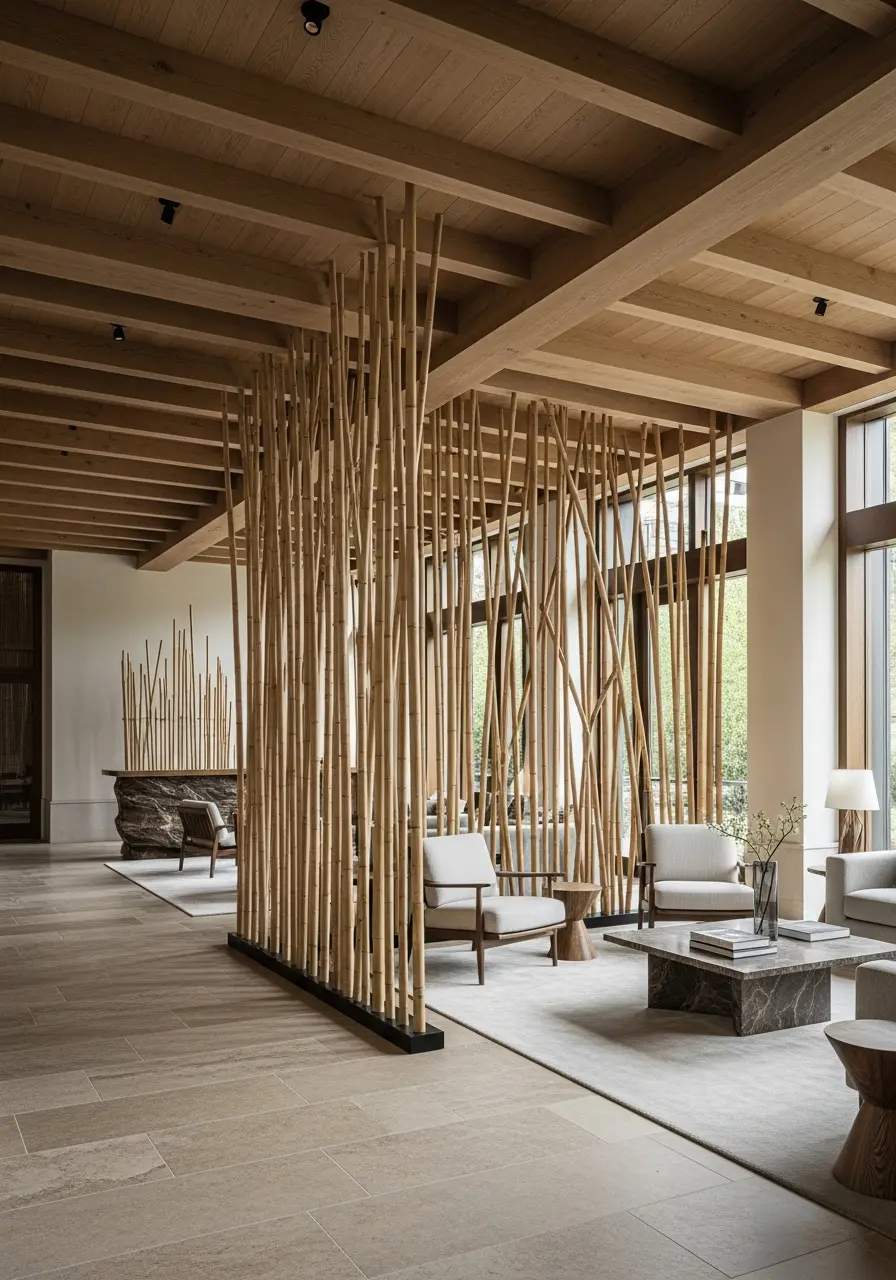
Architectural Partition Solutions for Hospitality Interior Projects
In contemporary hospitality design, the manipulation of space is paramount to creating memorable guest experiences. Architects and interior designers are increasingly moving away from rigid, permanent walls in favor of flexible, decorative, and functional hospitality partition systems. These architectural elements serve not only to define specific functional zones—such as reception lounges, dining areas, and guestroom suites—but also to introduce texture, warmth, and visual interest into large, often impersonal commercial spaces.
As sustainability becomes a central pillar of luxury hospitality, the specification of natural materials for these internal systems has grown significantly. Bamboocrafted stands at the intersection of this trend, offering sophisticated natural material solutions that satisfy the demanding aesthetic and performance requirements of high-traffic environments like hotels, resorts, and upscale restaurants.
The Strategic Role of Partitioning in Hospitality Design
A well-conceived hospitality partition system goes beyond mere space division. It influences acoustic comfort, directs traffic flow, controls lighting, and reinforces the design narrative of the property. In an era where open-plan lobbies are multifunctional hubs, partitions create necessary privacy pockets without sacrificing the sense of openness.
Spatial Zoning and Flow Management
The primary function of any partition system is to organize space. In a hotel lobby, this might mean subtly separating the check-in area from a quiet co-working nook or a bustling bar. The goal is to guide guests naturally through the space while providing distinct environments suited to different activities.
Acoustic and Visual Privacy
While complete soundproofing isn’t always required, especially in common areas, reducing acoustic reverberation is crucial for comfort. Perforated or textured partitions, such as bamboo screens, help diffuse sound waves, creating quieter zones. Visually, they offer varying degrees of porosity, allowing designers to balance openness with intimacy.
The Ascent of Bamboo in Luxury Hospitality Interiors
Among natural materials, bamboo has emerged as a premier choice for architectural systems in the hospitality sector. Its unique blend of aesthetic versatility, structural integrity, and environmental credentials makes it highly suitable for hospitality partition applications.
Aesthetic Versatility: From Japandi to Tropical Modernism
Bamboo partitions integrate seamlessly into diverse design languages. In properties embracing the minimalist elegance of Japandi design, sleek bamboo poles or precisely engineered panels provide clean lines and organic texture. For tropical resorts, more rustic, raw bamboo forms can enhance an authentic, nature-connected atmosphere. Bamboocrafted provides materials that can be customized in terms of color, finish, and form to align precisely with the project vision.
Durability and Performance in High-Traffic Environments
Hospitality interiors require materials that can withstand rigorous daily use. Engineered bamboo is remarkably stable and durable, often surpassing traditional hardwoods in hardness. When properly finished, it is resistant to scratches and moisture, essential for areas near pools, spas, or dining facilities. Unlike some synthetic alternatives, quality bamboo systems maintain their structural integrity and appearance over time, ensuring a strong return on investment for owners and developers.
Sustainability and Wellness Certification
For projects pursuing LEED, BREEAM, or WELL certification, bamboo is a strategic asset. It is a rapidly renewable resource, reaching maturity in a fraction of the time of timber. Specifying natural, biophilic materials like bamboo has been shown to improve guest well-being and satisfaction, aligning with the growing demand for health-conscious travel.
Design Application Scenarios for Hospitality Partitions
The application of hospitality partition systems varies across the different zones of a property, each presenting unique challenges and opportunities.
Hotel Lobbies and Public Spaces
In large lobbies, partitions are essential for creating human-scale environments. A custom Bamboocrafted screen system can define a luggage storage area, frame a water feature, or break up extensive corridors. Often, these partitions serve as architectural art installations, showcasing intricate weaving or geometric patterns that become signature design elements.
Restaurants and Bars
Zoning is critical in food and beverage outlets. Partitions create intimate dining nooks, separate private dining rooms from the main floor, or screen service stations. Bamboo’s inherent warmth contributes to a welcoming ambiance, and its porosity can be controlled to maintain the energy of the space while providing tableside privacy.
Guestrooms and Suites
Within guestrooms, particularly in open-plan suite concepts, partitions elegantly divide sleeping areas from living or working zones. They can replace traditional wardrobe walls or serve as decorative headboards that also function as spatial dividers. Bamboocrafted offers customization to integrate lighting or other technology directly into these room systems.
Professional Considerations When Specifying Partition Systems
When selecting a hospitality partition, architects and designers must consider several critical technical factors beyond aesthetics.
Acoustics and Light Transmission
The ‘openness factor’ of a partition determines both acoustic diffusion and light penetration. It’s essential to analyze the primary need: is it visual screening, noise reduction, or simply defining a boundary? Designers can work with specialists at Bamboocrafted to develop systems with the appropriate density and pattern.
Fire Rating and Compliance
Commercial interiors are subject to stringent fire safety regulations. It is imperative to ensure that any bamboo or natural material system meets the required fire codes (e.g., Class A in many jurisdictions). Bamboocrafted provides certified materials systems engineered to meet these rigorous standards, ensuring compliance without compromising design.
Installation and Structural Integration
Whether a partition is top-hung, floor-mounted, or integrated into cabinetry, early coordination is key. Hospitality projects often require custom engineering to ensure stability, particularly in areas accessible to the public. The method of installation affects both the aesthetic outcome and the ease of future maintenance or reconfiguration.
Conclusion
Integrating natural material partitions is a sophisticated strategy for enhancing the functional and aesthetic quality of hospitality interiors. By utilizing a flexible, durable, and sustainable hospitality partition system, architects and designers can create dynamic spaces that resonate with modern travelers while meeting commercial performance requirements. Bamboocrafted remains dedicated to supporting the architectural community with premium, customizable bamboo and natural material systems that bring ambitious hospitality visions to life.
FAQ: Architectural Hospitality Partitions
Q: Are bamboo partitions suitable for high-moisture hospitality areas like spas or outdoor terraces?
A: Yes, provided the correct species and treatment are selected. Bamboocrafted offers engineered bamboo and specialized finishes designed specifically for durability in humid or exterior hospitality environments.
Q: Can custom designs or acoustic backing be integrated into your bamboo screen systems?
A: Absolutely. Bamboocrafted specializes in bespoke solutions. We can execute custom patterns, integrate acoustic insulation layers, and even build in lighting components to meet specific design and performance criteria.
Q: What is the maintenance regimen for bamboo partitions in high-traffic commercial spaces?
A: Generally, maintenance is minimal, involving regular dusting. For high-traffic areas, periodic inspection and re-application of protective finishes (similar to maintaining high-end wood joinery) may be recommended to ensure longevity.
Q: How do bamboo partition systems compare in cost to traditional drywall or glass partitions?
A: While the initial material cost may be higher than basic drywall, bamboo partitions offer distinct decorative and functional value that permanent walls cannot. When considering installation speed, design impact, and flexibility, they are often a very competitive and high-value alternative to custom glass or timber systems.