
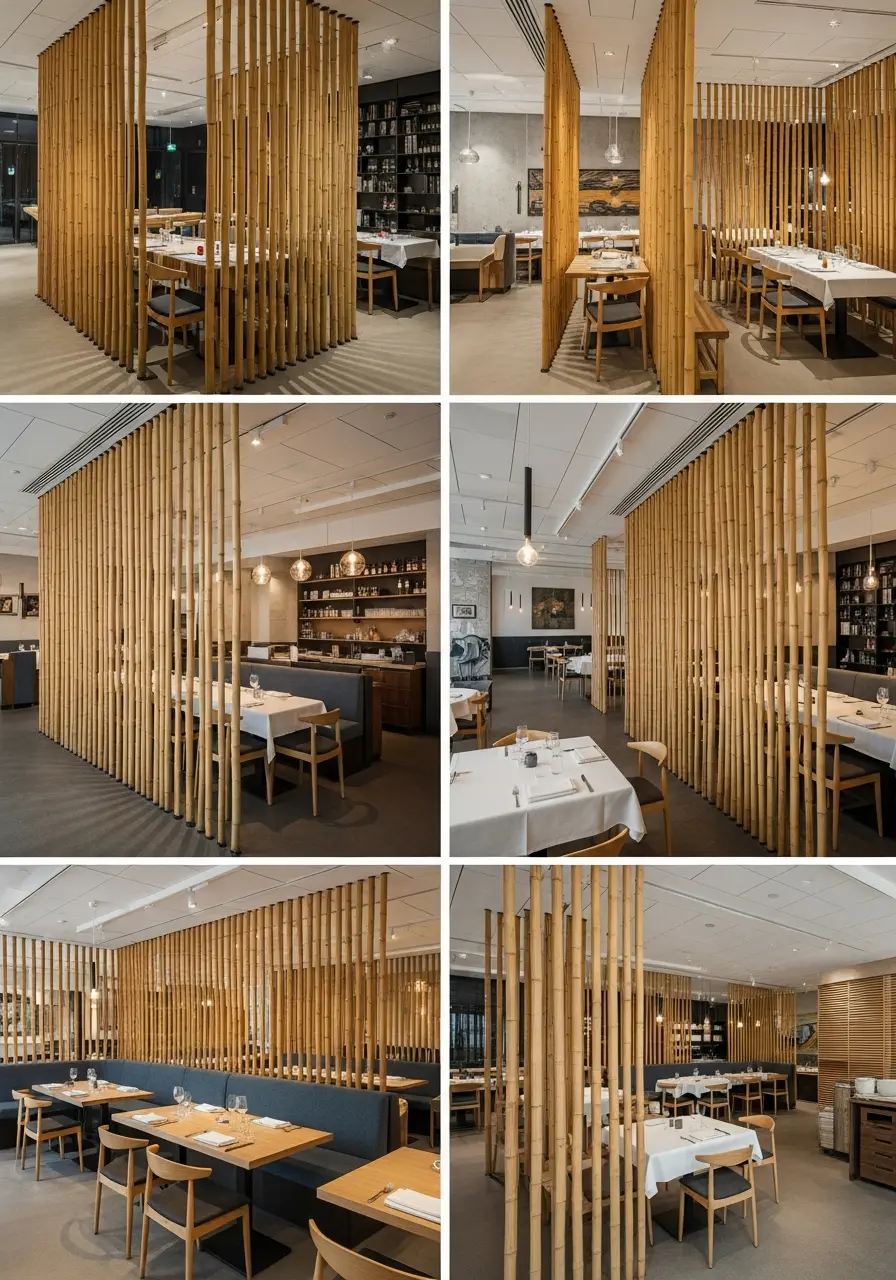
Best Restaurant Divider Ideas for Small and Large Dining Spaces
In the competitive landscape of hospitality design, spatial optimization is paramount. Architects and interior designers are constantly challenged to create dining environments that balance operational efficiency with an exceptional guest experience. Effectively managing the flow, intimacy, and acoustics of a dining room often comes down to successful spatial zoning. This article explores innovative and practical restaurant divider ideas tailored for both intimate, small footprints and sprawling, large-scale dining spaces, focusing on sustainable, natural material solutions that enhance contemporary architecture.
The Strategic Importance of Spatial Zoning in Hospitality
Beyond mere aesthetics, restaurant divider ideas serve critical functional roles. Effective zoning allows for varied dining experiences within a single establishment—from quiet business lunches to lively group gatherings. It optimizes table turnover by creating manageable sections and can significantly improve the acoustic environment by breaking up sound waves, reducing noise pollution in open-plan designs. Furthermore, strategic partitioning can define circulation paths, ensuring smooth service flow and enhancing overall operational productivity.
Optimizing Small Dining Spaces: Intimacy without Congestion
In smaller venues, the primary challenge is maximizing capacity while avoiding a cramped atmosphere. The key is to define areas without fully enclosing them. High-impact, low-footprint solutions are essential.
1. Translucent and Open-Weave Bamboo Screens
Open-weave restaurant divider ideas offer visual separation without blocking light or sightlines entirely. Bamboo screens or panels with intricate, geometric patterns provide a sophisticated, natural touch that aligns perfectly with modern and Japandi aesthetic trends. Bamboocrafted’s architectural systems offer customizable densities, allowing designers to control the degree of transparency required for specific zones, maintaining a sense of openness even in tight quarters.
2. Fixed Half-Walls with Integrated Planters
A classic solution reimagined: partial-height walls can be clad in natural bamboo paneling or cladding. By integrating planters along the top, you add a biophilic layer that increases privacy without making the space feel confined. This creates a psychological boundary that feels natural and welcoming.
3. Modular and Portable Partitions
For maximum flexibility in small spaces where dining layouts change frequently, lightweight, modular bamboo partitions are excellent. They can be quickly deployed to create temporary private dining areas or adjusted to accommodate varying group sizes. These solutions provide the operational agility that small, high-traffic restaurants need.
Dynamic Solutions for Large Dining Spaces: Scaling Intimacy
In large-scale restaurants, the issue is often the opposite: avoiding a cavernous, impersonal feel. The objective is to create "restaurants within a restaurant"—distinct, cozy zones that offer unique dining atmospheres while maintaining a cohesive overall design.
1. Custom Architectural Bamboo Structures
For new builds or major renovations, integrated architectural elements provide impactful restaurant divider ideas. Floor-to-ceiling bamboo pole installations can create dramatic visual barriers that act as sophisticated zoning devices. These bespoke installations can be designed with varying pole diameters and spacing to manipulate light and shadow, creating visually stunning boundaries that feel organic yet contemporary. Bamboocrafted specializes in custom architectural systems tailored for large hospitality projects.
2. Decorative Screen Systems and Sliding Panels
Sliding screen systems offer exceptional versatility. Large decorative panels, utilizing bamboo or intricate natural materials, can be suspended on tracks to partition off entire sections for large private parties or conferences, then easily slid back to open the space during peak hours. This allows large operators to monetize their square footage more effectively.
3. Zone Definition through Cladding and Ceiling Treatments
Zoning doesn’t always require a physical barrier at floor level. Using distinct materials for bamboo wall cladding and ceiling systems in specific areas can effectively delineate different dining sections. For instance, a private alcove can be defined by rich, dark-stained bamboo wall panels and an intricate bamboo ceiling lattice, creating a cozy and exclusive atmosphere within a much larger room.
Material Focus: Why Bamboo for Commercial Partitions?
When evaluating restaurant divider ideas, material selection is crucial for commercial durability, sustainability, and aesthetic impact. Bamboocrafted advocates for bamboo due to its exceptional properties:
- Sustainability: Bamboo is a rapidly renewable resource, making it an eco-conscious choice for hospitality projects aiming for green building certifications.
- Durability: Engineered bamboo products boast high tensile strength and hardness, capable of withstanding the rigors of high-traffic commercial environments.
- Aesthetic Versatility: Available in various forms—from raw poles to sophisticated engineered panels and woven textures—bamboo complements styles from sleek modern to warm Japandi.
- Acoustic Benefits: Woven bamboo and lattice structures have natural sound-diffusing properties, contributing to a more pleasant acoustic environment.
Professional Considerations for Implementation
Before finalizing your design and material choices, consider these practical factors:
1. Mobility and Flexibility Requirements
Assess how frequently the space needs to reconfigure. Will fixed architectural installations or lightweight, portable solutions best serve the long-term operational needs?
2. Maintenance and Cleanability
In hospitality, surfaces must be easy to clean. Bamboo panels and screens should be finished with commercial-grade, low-VOC sealants that resist spills and facilitate hygiene maintenance.3. Fire Safety and Code Compliance
For any commercial interior installation, ensure the chosen materials and finishes meet local fire safety regulations. Ask suppliers for fire rating certifications and treatment options.
4. Acoustic Performance
If acoustic privacy is a primary concern, consider the density of the restaurant divider ideas. Fully solid or engineered bamboo partitions will provide better sound separation than open lattice work.
Frequently Asked Questions (FAQ)
What are the most durable materials for restaurant dividers?
For high-traffic commercial spaces, durable materials include tempered glass, steel, high-quality wood, and engineered bamboo. Bamboo, in particular, offers impressive hardness and strength, comparable to traditional hardwoods, with the added benefit of sustainability.
Can dynamic restaurant dividers help with acoustics?
Yes, definitely. Restaurant divider ideas can significantly improve acoustics by breaking up large, open spaces and diffusing or absorbing sound waves. Woven bamboo screens and perforated or textured panels are effective at reducing reverb.
How do I choose between fixed or mobile partitions for a restaurant?
The choice depends on operational needs. If your dining layout is relatively stable, fixed installations provide robust, integrated architectural features. If you require flexibility for events or varied group sizes, mobile or modular systems are the practical solution.
Are natural material dividers, like bamboo, easy to maintain in a restaurant?
Yes, provided they are correctly finished. Commercial-grade sealants and lacquers protect the natural materials from moisture and stains. Regular cleaning with appropriate products ensures longevity in demanding hospitality environments.
Conclusion
Implementing effective restaurant divider ideas is a vital strategy for maximizing the potential of any hospitality space, regardless of size. From maximizing intimacy and capacity in small venues to creating specialized zones within large dining halls, the right partitioning solutions enhance both aesthetics and operations. Bamboo, with its unique combination of sustainability, durability, and natural warmth, stands out as a superior material choice for contemporary designers. Bamboocrafted is committed to partnering with architects and designers to develop custom bamboo architectural systems that redefine spatial dynamics. For a personalized consultation and to explore our range of material solutions, please contact our expert team.