Elevating Commercial Interiors: The Versatility of Sustainable Ceiling Systems
In the realm of modern commercial architecture and luxury hospitality design, every element contributes to the overall guest experience and brand perception. While walls and floors often receive significant attention, the ceiling plane represents a vast, often underutilized canvas for architectural expression. Integrating sustainable ceiling systems is no longer just an environmental choice; it is a sophisticated design strategy that merges aesthetics, functionality, and responsible sourcing. Architects and interior designers for high-end hotels, resorts, and corporate spaces are increasingly turning to natural materials to create impactful, healthy, and visually stunning overhead installations. Bamboocrafted stands at the forefront of this movement, providing premium, customizable solutions that redefine the potential of the fifth wall.
What Are Sustainable Ceiling Systems?
Sustainable ceiling systems encompass architectural overhead treatments designed and manufactured with environmental responsibility at their core. These systems utilize rapidly renewable materials, such as bamboo, or responsibly harvested wood, often featuring recycled content or designed for circularity. Beyond the material choice, true sustainability in ceiling design considers the entire lifecycle—from low-emission manufacturing processes to ease of disassembly and recyclability. In contemporary commercial interiors, these systems often take the form of baffles, grilles, panels, or custom linear configurations, offering designers a sophisticated palette to enhance visual interest while adhering to green building standards. When crafted from materials like bamboo, they embody the essence of Japandi and biophilic design, bringing warmth and organic texture to large-scale commercial projects.
Benefits of Sustainable Ceiling Systems for Modern Architecture
The specification of sustainable ceiling systems offers multifaceted advantages that extend far beyond aesthetics, aligning perfectly with the demands of modern architectural projects.
- Enhanced Aesthetics and Biophilic Connection: Natural materials inherently create a more welcoming and biophilic environment. In hospitality and corporate settings, this connection to nature has been shown to reduce stress and improve well-being, enhancing the overall user experience. The varied textures and warm tones of bamboo and wood add depth and sophistication that synthetic materials cannot replicate.
- Superior Acoustic Performance: Commercial spaces, particularly restaurants, lobbies, and open-plan offices, often struggle with noise control. Many sustainable ceiling systems, especially linear baffle and grille configurations, are designed to work in conjunction with acoustic backing materials to absorb sound, significantly improving speech intelligibility and comfort. These interior systems are crucial for creating conducive environments in bustling commercial hubs.
- Sustainability and LEED Contributions: Utilizing rapidly renewable resources like bamboo or FSC-certified wood contributes directly to green building certifications such as LEED and WELL. These materials embody lower carbon footprints compared to traditional metal or mineral fiber ceilings, supporting the sustainability goals of developers and brands.
- Durability and Longevity: Premium natural materials, when expertly engineered and finished, offer exceptional durability suitable for high-traffic commercial environments. Engineered bamboo, in particular, boasts impressive stability and hardness, ensuring the ceiling system remains pristine for years.
- Integration of Services: Modern sustainable systems are designed for functionality, allowing for the seamless integration of lighting, HVAC, fire suppression, and security systems while maintaining a clean visual plane.
Applications in Hotels, Resorts, and Commercial Spaces
The versatility of sustainable ceiling systems makes them suitable for a wide array of prestigious commercial applications, where they act as a key differentiator in design quality.
Luxury Hotels and Resorts
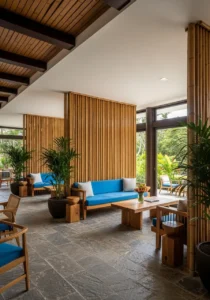
In the hospitality sector, the ceiling sets the tone for luxury and relaxation. Imagine a resort lobby where a grand, sweeping bamboo baffle ceiling mimics the contours of the landscape, creating an immediate sense of place. In guest rooms, linear wood ceilings add warmth and a sense of crafted luxury, essential for high-end branding. Over swimming pools or in spa areas, naturally moisture-resistant wood species or treated bamboo systems provide durable elegance.
Upscale Restaurants and Bars
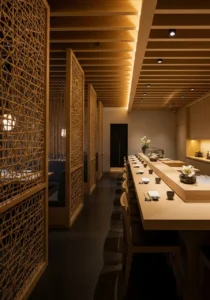
Restaurants require a delicate balance of intimate atmosphere and functional acoustics. A customized customized design solution for the ceiling can define dining areas, manage noise levels, and create a strong visual identity. Dark-stained bamboo grilles can evoke sophistication, while lighter, natural tones suit airy, casual dining concepts. These are effective acoustic wood ceiling systems for restaurants seeking to balance buzz with comfort.
Corporate Offices and Public Spaces
Modern workplaces prioritize employee well-being and collaborative environments. Integrating sustainable ceiling systems in boardrooms, break areas, and open offices fosters a connection to nature (biophilia) that can boost productivity and satisfaction. In public areas like airport terminals or convention centers, large-scale natural material ceilings offer durability and a welcoming aesthetic.
Material Options and Design Possibilities
Achieving the desired aesthetic and functional outcomes relies on selecting the right materials and configurations. Bamboocrafted specializes in leveraging the unique properties of natural resources.
- Bamboo: As a rapidly renewable grass, bamboo is the epitome of sustainability. Engineered bamboo offers incredible stability, strength, and a distinctive, contemporary grain. It can be finished in a variety of tones, from natural pale yellows to deep carbonized browns, fitting seamlessly into minimalist or rich interior palettes. Its natural linearity excels in baffle and grille formats.
- Responsibly Sourced Wood: Traditional hardwoods and softwoods remain popular for their classic appeal. Species are selected based on color, grain, and performance characteristics, always ensuring responsible forest management (such as FSC certification).
- Design Configurations: The possibilities are virtually limitless. Linear baffles create rhythm and depth; grilles offer a monolithic textured look; perforated panels provide acoustic performance; and custom geometric shapes allow for true architectural statements. Systems can be curved, tiered, or integrated with lighting for dramatic effect. Utilizing these natural material systems allows architects to push boundaries.
How Architects Choose the Right Ceiling System
Selecting the appropriate sustainable ceiling systems requires careful consideration of several project-specific factors:
- Aesthetic Vision: Does the project call for the warm, natural look of bamboo, or the classic appeal of a specific wood species? The choice of material and configuration (linear, panel, etc.) must align with the overall design concept, whether it’s Japandi, rustic luxury, or sleek modernism.
- Performance Requirements: Acoustic performance is often critical. Consider the Noise Reduction Coefficient (NRC) ratings needed. Additionally, fire ratings (Class A) are paramount for commercial interior finishes and must be verified.
- Maintenance and Durability: In high-traffic or demanding environments (like high humidity in spas), the material must be robust and easy to maintain. Understanding the long-term care required for natural materials is essential.
- Installation and Accessibility: How will the system be installed, and is access to the plenum space above required for maintenance of services? Many modular systems offer easy access panels or simple clip installations.
- Budget and Sustainability Goals: Balancing budget constraints with desired sustainability credentials (LEED points) requires early collaboration with manufacturers to optimize the design and material choice.
Why Choose Bamboocrafted
Bamboocrafted is not merely a supplier; we are collaborative partners in achieving architectural excellence through sustainable design. We specialize in transforming visions into reality by leveraging our deep expertise in bamboo architectural materials and custom manufacturing. Our commitment to quality ensures that every system, whether a standard configuration or a completely bespoke creation, meets the rigorous demands of commercial applications.
We work closely with architects and designers from the initial concept stage, providing technical support, material samples, and customized engineering solutions. Our state-of-the-art fabrication capabilities allow for precision detailing, ensuring a flawless fit and finish. By choosing Bamboocrafted, you are opting for unparalleled craftsmanship, environmental stewardship, and a dedicated team focused on elevating your commercial interior projects.
Frequently Asked Questions
What makes bamboo a good material for sustainable ceiling systems?
Bamboo is exceptionally sustainable because it is one of the fastest-growing plants on Earth, harvestable in 3-5 years compared to decades for trees. It sequesters significant amounts of CO2 and regenerates without replanting. Architecturally, engineered bamboo is stable, durable, and offers a beautiful, contemporary aesthetic suitable for high-end commercial interiors.
Are sustainable ceiling systems fire-rated for commercial use?
Yes. For use in commercial public spaces like hotels and offices, sustainable ceiling systems can be treated with fire-retardant finishes to achieve Class A fire ratings, meeting stringent building codes.
How do these ceiling systems improve acoustics?
Sustainable ceiling systems, especially those using linear baffles, grilles, or perforated panels, work by allowing sound waves to pass through the gaps or perforations where they are absorbed by acoustic insulation installed above. This reduces reverberation and noise levels significantly, creating a more comfortable environment.
Can sustainable ceiling systems be customized?
Absolutely. Customization is a core offering at Bamboocrafted. We can customize the member size, spacing, finish, material (different bamboo tones or wood species), and create complex geometric or curved configurations to meet the specific design intent of luxury hotels or unique commercial projects.
What is the maintenance required for bamboo ceiling systems?
In typical interior commercial environments, maintenance is minimal, usually involving occasional dusting or wiping with a damp cloth. The durable finishes applied during manufacturing protect the bamboo. For exterior or high-humidity applications, periodic re-application of protective finishes may be required, similar to other natural wood products.
Conclusion
Integrating sustainable ceiling systems is a powerful way to enhance the design, performance, and environmental credentials of luxury hotels, resorts, and sophisticated commercial spaces. By utilizing natural materials like bamboo and wood, architects and designers can create immersive biophilic environments that resonate with quality and responsible luxury. These systems offer superior acoustics, durability, and endless design possibilities, from minimalist linear baffles to intricate custom installations. Bamboocrafted is dedicated to providing premium, customizable natural material solutions that empower architects to realize their creative visions. Contact our team today to discuss how we can collaborate on your next project and elevate your commercial interiors with sustainable elegance.